A Florida FEI number search finds business entities through their federal tax identity. The FEI number — Federal Employer Identification Number, known federally as the EIN — is the nine-digit tax ID the IRS assigns to every business that hires employees, operates as a corporation or partnership, or files business tax returns. Florida’s registry records each entity’s FEI when provided, making it a searchable key to state records. This guide explains how the FEI search works, what the number reveals, where FEIs appear in business paperwork, and how one federal number can connect multiple related entities.
The FEI search answers different questions than name or document number lookups. Names identify entities to the public; document numbers identify filings to the state; the FEI identifies the taxpayer to the federal government. When your paperwork supplies a federal tax ID — from a W-9, a payroll record, a tax form, or a vendor file — the FEI search translates that federal identity into Florida’s registry records, revealing the entities behind the number.
What an FEI Number Is
The FEI is federal infrastructure with state-level visibility — understanding its structure and purpose makes search results interpretable:
The Number’s Format and Issuer
The IRS issues FEI numbers in the format 12-3456789: two digits, a hyphen, seven digits. Every business that needs one applies through IRS Form SS-4 — online, by fax, or by mail — and receives its number immediately upon online approval. Sole proprietors without employees may operate under their Social Security numbers instead, which is why some very small Florida entities show no FEI on their state records. Corporations, partnerships, multi-member LLCs, nonprofits, and any entity with employees all hold FEIs.
FEI vs EIN — Same Number, Different Names
The terms confuse searchers unnecessarily: FEI (Federal Employer Identification) and EIN (Employer Identification Number) are the same identifier. Florida’s registry labels the field “FEI”; federal forms say “EIN”; tax professionals say both. When a document requests either, the same nine-digit number answers — and when searching Florida records, either term leads to the same FEI search.
What the FEI Is Not
Three confusions recur. The FEI is not the document number — Florida’s state filing ID lives in a different field and searches differently. The FEI is not a sales tax number — Florida sales and use tax certificates come from the Department of Revenue under a separate system. And the FEI is not a license — it proves tax registration, not trade authorization. Paperwork mixing these identifiers up benefits from checking each against its proper system.
Where FEI Numbers Appear
Business paperwork references FEIs everywhere money and taxes meet:
Federal Tax Forms
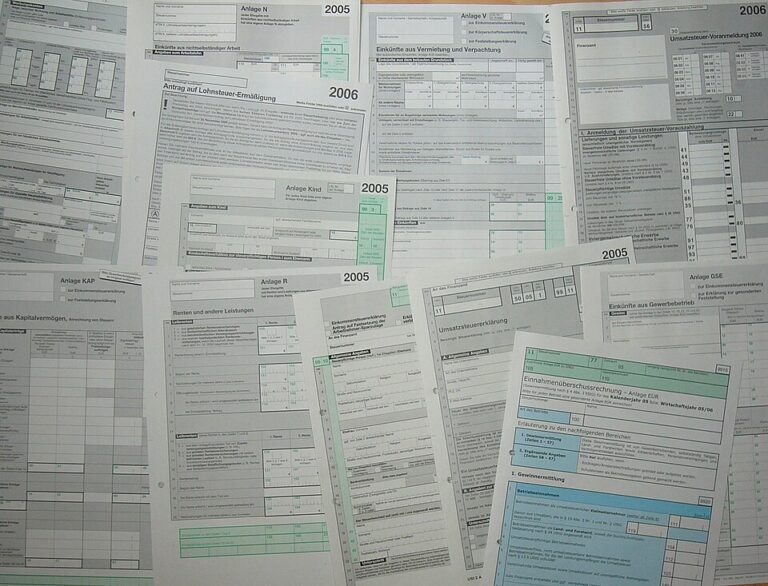
W-2s display the employer’s FEI prominently; 1099s carry the payer’s FEI; corporate income tax returns (1120s, 1120-Ss) and partnership returns (1065s) open with the entity’s FEI. Nonprofits’ Form 990 filings — public documents — display their FEI on every page. Any of these forms in your files supplies the number for a Florida registry lookup.
Banking and Vendor Files
Business bank accounts open under the entity’s FEI; W-9 requests — standard before vendor payments — collect it. Payroll systems store it; loan applications require it; merchant processing agreements list it. A vendor file built over years typically holds FEIs for every supplier — each one a potential Florida registry key.
State Filings and Registrations
Florida’s own registry records the FEI when entities provide it during formation or annual reports. Sales tax registrations, unemployment tax accounts, and licensing applications also collect FEIs. The number threads through state and federal systems alike — which is what makes cross-referencing between them possible.
How to Search Florida Entities by FEI Number Steps
The FEI search runs through the Division of Corporations’ detail search interface:
Step 1: Locate the FEI Number
Find the nine-digit number — formatted 12-3456789 or 123456789 — on whatever source you hold: a W-9, a tax form, a payroll record, a bank document. Copy the digits exactly; the hyphen is optional during entry but the nine digits are mandatory.
Step 2: Open the FEI Search Screen
Navigate to the Division of Corporations’ FEI detail search — reached from the records search options at search.sunbiz.org. Like every registry search, it is free, requires no account, and runs 24 hours a day.
Step 3: Enter the Number and Review All Matches
Enter the FEI and submit. Unlike the document number search’s single-result guarantee, the FEI search can return multiple entities — one FEI sometimes serves a group of related companies sharing federal tax infrastructure. Review every match: each result shows the entity name, document number, and status, connecting the federal number to specific Florida registrations.
Step 4: Open Each Entity’s Full Record
Click through to the detail pages of matching entities. The complete profile — status, agent, personnel, filings, documents — is accessible per entity, all linked by the one FEI you started with. Multiple matches typically reveal a corporate family: a holding company and its subsidiaries, or sister entities under common ownership.
Step 5: Confirm the Right Entity for Your Purpose
With multiple matches, context selects: the contract’s counterparty, the vendor’s name, the address you recognize. The FEI proves shared tax identity; the entity records provide the specific registrations. Together they answer who is behind the number — and which entity your transaction concerns.
One FEI, Multiple Entities: How It Happens
FEI search results returning several entities is common and usually meaningful:
Corporate Families and Holding Structures
Groups of related entities — a holding company with operating subsidiaries, sister LLCs under common ownership, a management company serving affiliated ventures — sometimes share one FEI while holding separate Florida registrations. The FEI search exposes the family: enter the number, receive the list. Market researchers and deal teams map ownership structures this way, tracing connections that name searches never surface.
Successor Entities and Tax Identity
Businesses that reorganize — a sole proprietorship incorporating, an entity converting between types — sometimes carry their FEI forward to the new structure. The old entity’s record and the new one can both associate with the number, documenting the transition. Reading both records together shows the business’s evolution in registry form.
Single-Entity FEIs Are the Norm
Most FEI searches return exactly one entity — the standard case of one business, one tax ID, one registration. Multiple matches are the exception worth interpreting, not the rule to expect. A single result still delivers the full verification value: the federal number and the state record confirm each other.
Privacy Limits on FEI Data
Florida’s registry displays FEIs on public records — a fact with planning implications. Nonprofits disclose FEIs automatically through their public Form 990s. Some entities minimize exposure through how they structure filings, but the general rule holds: FEIs on state records are public. Entities with privacy concerns weigh the tradeoffs during formation, often with professional guidance.

Lost or Unknown FEI Numbers
Businesses lose track of their own FEIs surprisingly often — recovery paths exist:
Check Existing Tax Documents
The number appears on every federal tax filing the entity made: prior returns, W-2s and 1099s issued, 990s for nonprofits. Bank records from account opening, old payroll reports, and formation service packages also carry it. Most lost-FEI cases resolve in the entity’s own files.
IRS Recovery for Your Own Number
When records are truly gone, the IRS re-issues an entity’s own FEI to authorized callers — the Business and Specialty Tax Line confirms EINs for the entity’s principals. The IRS does not provide lookup services for other companies’ numbers; third-party FEI discovery runs through the documents that entity issued.
State Records as a FEI Source
For entities that provided their FEI to Florida, the state record displays it — so a name search on the registry can recover a lost FEI. The reverse path works too: the FEI search finds entities when the number is known but the name is uncertain. The two identifiers search the same records from opposite directions.
FEI Search in Professional Workflows
Number-based entity research serves recurring professional needs:
Vendor Onboarding and KYB
Companies collecting W-9s from every vendor — standard practice — accumulate FEIs for the entire supplier network. Verifying those numbers against the Florida registry confirms each vendor’s registration and surfaces the entity details behind the tax ID: a know-your-business check that takes minutes per vendor.
Nonprofit Due Diligence
Donors and grantmakers verify charities through their FEIs, which tie together the registry record, the IRS’s public 990 filings, and charity-watch databases. One number connects all the verification layers — registration standing, financial disclosures, and governance history.
Lending and Credit Files
Business lenders index borrowers by FEI across products and years. The number anchors credit files the way document numbers anchor registry files — and cross-referencing the two at underwriting confirms the borrower’s registered identity matches its tax identity.
Florida Registry FEI Help and Support
Questions about FEI records, search difficulties, or registry interpretation go to the Division of Corporations: general inquiries at CorpHelp@dos.fl.gov or 850.245.6000 during business hours. The records search at dos.fl.gov/sunbiz remains available around the clock. For FEI application questions — getting a new number, not finding an existing one — the IRS handles everything through its own systems at irs.gov.
Entity Search
Corporation Search
LLC Search
Name Search
Sunbiz Search Guide
Registered Agent Search
Officer Search
Business
Guides
Name Reservations Before Formation
Businesses that know their name but are not ready to file can reserve it through the portal: an available corporate name holds for 120 days for a small fee, blocking other registrations while formation documents prepare. Reservations suit pre-formation planning, partnership formation delays, and financing timing. The reserved name releases automatically at expiry, so plan formation filings before the window closes.
Annual Report Reminders and Compliance Calendar
The portal’s annual report filing runs January 1 through May 1 every year, but the calendar matters year-round: records updated at filing time — agent changes, address moves, officer refreshes — take effect when the report processes. Owners who treat the annual report as a data-refresh exercise rather than a rubber stamp keep their public records accurate for free; the filing fee covers the update, and the record stays truthful for every future lookup.
Agent Duties Across Entity Types
The agent’s obligations look similar across entity types, with statutory anchors in different chapters: corporations under Chapter 607, LLCs under Chapter 605, partnerships under their own statutes. In every case the agent receives service of process, official state correspondence, and formal notices on the entity’s behalf. What the agent does not do is equally important: the agent files nothing, advises nothing, and represents nothing — the role is receipt and forwarding, nothing more. Entities that expect their agent to handle compliance find out the hard way that the annual report is still their own job.
Verifying Agent Listings Before Legal Deadlines
Attorneys and business owners verify agent listings before initiating service, filing suits, or answering demands — because service errors restart procedural clocks. The verification takes one search: confirm the agent of record on the live portal, confirm the address is a real street location, and note the county for service logistics. Entities defending suits run the same check in reverse, confirming where papers would arrive and that their agent is functioning before a complaint makes the question urgent.
Officer Listings on Nonprofit Records
Florida nonprofits follow the same disclosure pattern with a board emphasis: directors appear on annual reports, often alongside officers. Donors and grantmakers reviewing a charity’s record see who governs it — the same officer search that maps for-profits maps nonprofit boards, and the same stability signals apply. Board churn at a nonprofit deserves the same scrutiny as officer churn anywhere else.
Frequently Asked Questions About Florida FEI Number Search
Is a Florida FEI number search free?
Yes. The registry’s FEI search is free with no account required, 24 hours a day — like every search the Division of Corporations offers.
What is the difference between FEI and EIN?
Nothing — they are the same nine-digit federal tax ID. Florida records label it FEI; IRS forms call it EIN. The terms are interchangeable.
Why did my FEI search return multiple companies?
One FEI can serve multiple related entities — holding structures and corporate families sometimes share federal tax identity. Review each match: the list often maps an ownership group.
Where do I find a company’s FEI number?
On any federal tax form the company issued or filed — W-2s, 1099s, 990s for nonprofits — plus W-9s, bank documents, and Florida registry records that display the FEI field.
Does every Florida business have an FEI number?
No. Sole proprietors without employees may use their Social Security numbers instead, and those entities show no FEI on state records. Corporations, partnerships, multi-member LLCs, and employers all hold FEIs.
Is this website affiliated with the IRS or the Division of Corporations?
No. FloridaCompanySearch.us is an independent guide. All official details we publish are verified against state and federal sources, and we always point you to the free official records.